
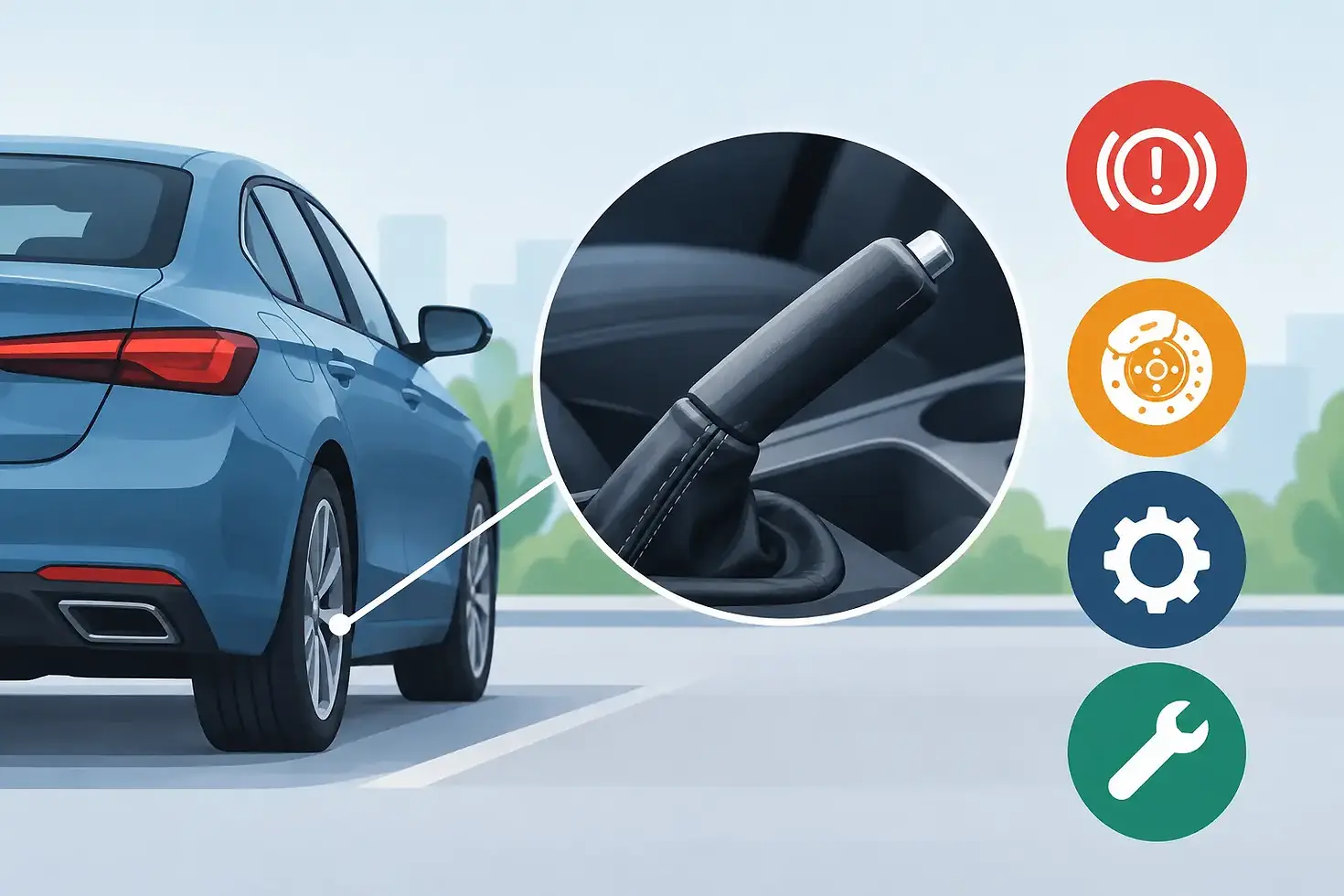
Top Parking Brake Issues and What They Mean

A parking brake that will not hold can turn an ordinary stop into a real safety concern, especially on Albany and East Bay hills. The top parking brake issues usually start with small clues: a lever that pulls too high, a pedal that feels loose, a warning light that stays on, or a vehicle that creeps after you park. None of those signs are worth ignoring.
Your parking brake is separate from your regular hydraulic braking system, but it works with it to help keep your vehicle stationary when parked. Depending on the vehicle, it may use a hand lever, foot pedal, electronic switch, cables, rear brake shoes, rear calipers, or a combination of these parts. That difference matters when diagnosing a problem.
Top Parking Brake Issues to Watch For
The parking brake will not hold the vehicle
This is the issue drivers notice most clearly. You set the brake, shift into Park, and the vehicle still rolls or feels as though it could roll. On a manual-transmission vehicle, the concern is even more immediate because the parking brake is a key part of keeping the car in place.
A weak parking brake can be caused by stretched or seized cables, worn rear brake shoes, improperly adjusted drum brakes, worn hardware, or a problem with the rear calipers on vehicles where the parking brake is built into the caliper. On some vehicles, the brake is technically applied but does not generate enough holding force.
Do not test a questionable parking brake on a steep street. Park on level ground when possible, leave an automatic transmission in Park or a manual transmission in gear, and have the system inspected soon. Park is not a substitute for a functioning parking brake, particularly when a vehicle is parked on an incline.
The lever, pedal, or switch feels wrong
A hand lever that pulls nearly straight up, a foot pedal that sinks too easily, or an electronic switch that does not respond normally can all point to a parking brake problem. Mechanical systems often develop excess travel as cables stretch or rear brake components wear. A pedal or lever that feels unusually stiff may indicate a cable that is binding or corrosion in a moving component.
Electronic parking brakes add motors, control modules, sensors, and wiring to the system. If you hear repeated motor noise, see a parking brake message on the dash, or cannot release the brake normally, the cause may not be a simple adjustment. Forcing the system can create more damage, so it is better to have the vehicle checked before attempting a do-it-yourself fix.
The parking brake warning light stays on
The red brake warning light deserves attention, even if your regular brakes seem to work normally. First, confirm that the parking brake has fully released. A partially engaged pedal, lever, or electronic brake can keep the light on.
If the brake is fully released and the light remains illuminated, it can also signal a hydraulic brake concern, such as low brake fluid. That is not a warning to postpone. Low fluid may be related to worn brake pads, a leak, or another issue that needs a professional inspection.
Some vehicles display a separate electronic parking brake warning or a message such as “Parking Brake Fault.” Those alerts should be diagnosed with the correct equipment rather than guessed at. The right repair depends on what the vehicle is reporting and whether the brake can safely be applied and released.
The parking brake drags after it is released
A dragging parking brake may make the vehicle feel sluggish, create a hot or burning smell near a rear wheel, reduce fuel economy, or cause one rear wheel to become much hotter than the other. You may also hear scraping or notice that the vehicle pulls slightly while driving.
Common causes include a seized cable, a sticking caliper mechanism, corroded brake hardware, or brake shoes that do not retract correctly inside a drum. Moisture and corrosion can make this more likely on vehicles that sit for long periods or are parked outside.
Do not continue driving if you suspect a brake is dragging. Friction creates heat quickly, and heat can damage pads, rotors, shoes, drums, calipers, wheel bearings, and even tires. A repair that begins as a cable or hardware issue can become a larger brake job if the vehicle keeps being driven.
The parking brake is stuck on or will not release
A stuck parking brake can leave you unable to move the vehicle, while a brake that releases only after several attempts is warning you that something is not working correctly. In cold or wet conditions, moisture can contribute to sticking, but the underlying cause is often worn, corroded, or binding components.
With an electronic parking brake, a weak battery can sometimes complicate the situation. However, a low battery is not the only possibility. A failed actuator, damaged wiring, or a mechanical issue at the rear brake can produce similar symptoms. Avoid repeatedly cycling the switch or trying to overpower the vehicle with the accelerator. That can damage the brake system and create an unsafe situation.
Why Rear Brake Condition Matters
Parking brake performance is closely tied to the condition of the rear brakes, but the setup varies by vehicle. Some cars use small drum-style shoes inside the rear rotor hat solely for parking. Others use the rear brake pads and calipers for both normal stopping and parking. Trucks, SUVs, and older designs may use a more traditional cable-operated rear drum system.
That is why a quick visual check is not always enough. A parking brake adjustment may help in some cases, but adjustment cannot restore worn shoes, a seized cable, damaged hardware, or a failing caliper. The goal is not simply to make the lever feel tighter. The goal is to ensure the vehicle holds securely and releases completely.
For vehicles from model year 1999 and newer, a brake-focused inspection can identify whether the problem is mechanical, electronic, or related to wear in the rear braking system. At Just Brakes, that means explaining what is actually causing the issue and what repair is needed, without turning a straightforward brake concern into an unclear list of extras.
What You Can Check Before Scheduling Service
You do not need to take apart your brakes to provide useful information. Note whether the issue happens every time or only after rain, cold weather, or extended parking. Pay attention to whether one rear wheel smells hot, whether the dash warning light is on, and whether the parking brake releases fully.
If your vehicle has a hand lever or foot pedal, notice how far it travels compared with normal. If it has an electronic parking brake, write down the exact dash message if one appears. Those details help a technician narrow down the likely cause faster.
Avoid spraying lubricants onto brake parts, adjusting cables without knowing the brake design, or driving with a suspected dragging brake. These systems need to be clean and correctly adjusted. Improvised repairs can mask the symptom while reducing holding power or contaminating friction surfaces.
When the Problem Needs Immediate Attention
Arrange an inspection promptly if the vehicle will not stay parked, the parking brake will not release, a red brake warning light remains on, or you smell burning near a wheel. The same applies if the rear wheel is unusually hot or the vehicle pulls while driving.
If the car is already parked and the brake will not release, do not risk driving it to a shop. A stuck brake can overheat within a short distance. In that situation, arranging a tow is the safer choice.
A reliable parking brake is easy to take for granted until it is not there when you need it. If yours feels weak, sticks, drags, or triggers a warning light, getting a clear brake inspection now can protect your vehicle, your schedule, and the people around it.

Comments